New
See if buyers or sellers have the advantage in your ZIP code
Get a free ZIP-level report showing local leverage, pace, inventory pressure, and what that may mean for your offer.
Our Services
ZIP-Level Market Analysis, Transparent Calculation, Regional Context.
HomeBuyer Leverage turns public housing and economic data into practical, ZIP-specific insight for first-time buyers navigating an uncertain market.
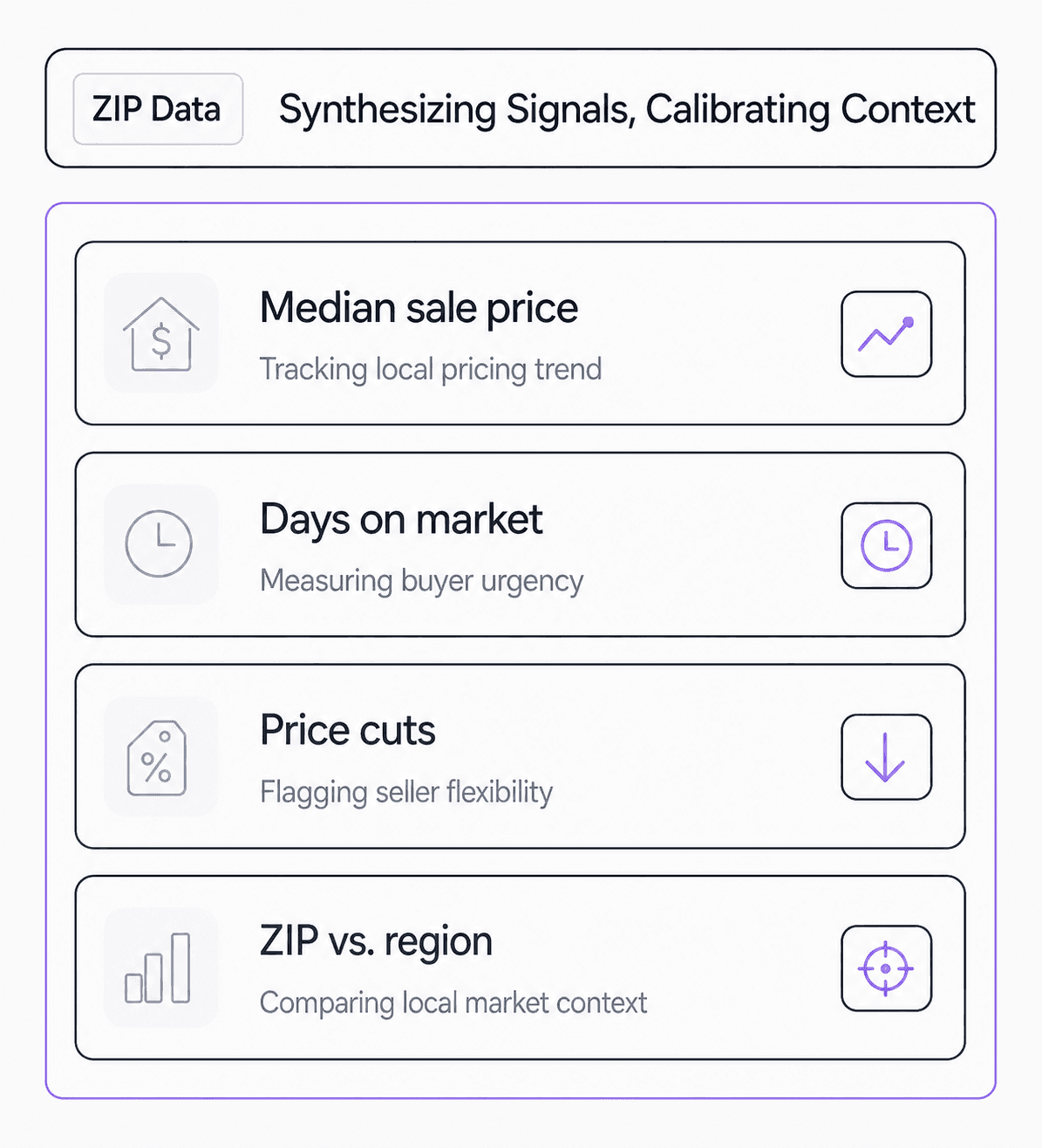
ZIP-Level Analysis
See what your local market is really doing
Forget the headlines about the "housing market". With over 33,000 ZIP codes in the US, there is no such thing.
Each of our Reports focuses on one ZIP code, using objective market and economic data to show whether buyers have more leverage, less leverage, or a mixed negotiating position right now.
ZIP-specific
Data-driven
Context-sensitive
Buyer Guidance
Turn market signals into offer strategy
The report does not stop at a score. It translates the numbers into practical guidance on where buyers may be able to push on price, credits, repairs, timing, and other negotiation terms.
Negotiation context
Offer framing
Decision support
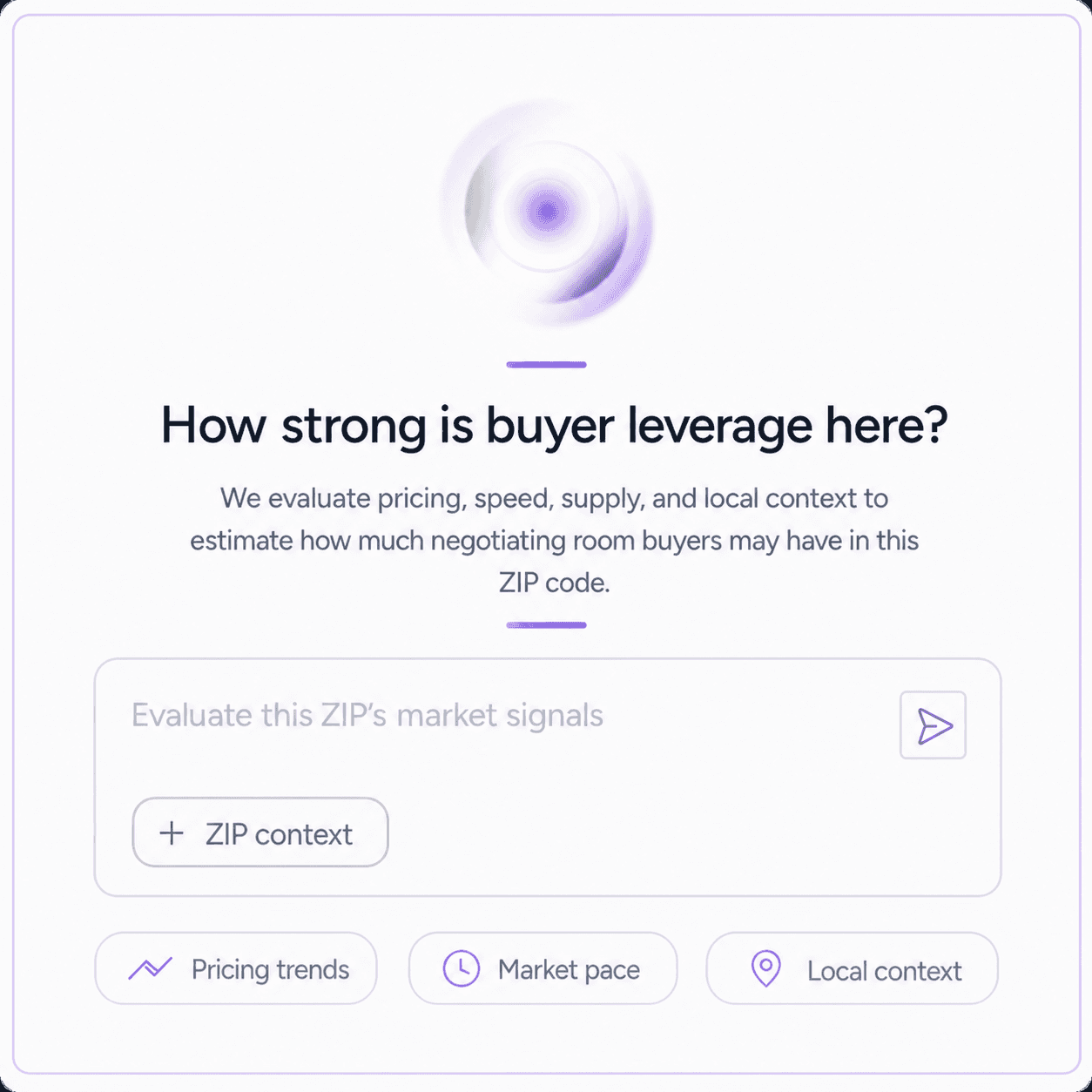
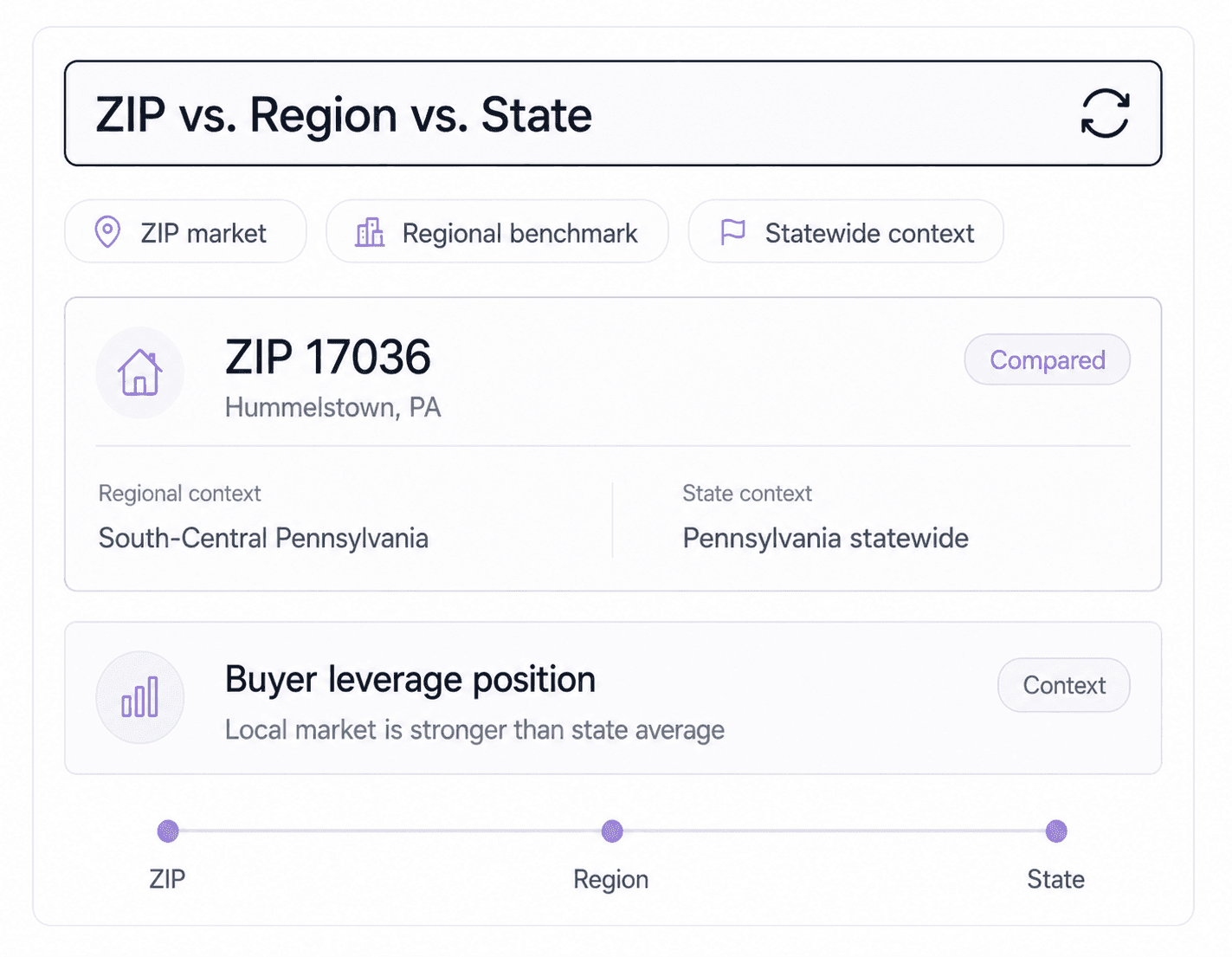
Market Comparison
Understand how your ZIP compares
Each ZIP is placed in context against its surrounding region and state, so buyers can tell whether local conditions are stronger, softer, or roughly in line with the broader market nearby.
ZIP vs. region
ZIP vs. state
Comparative context
Detailed Report
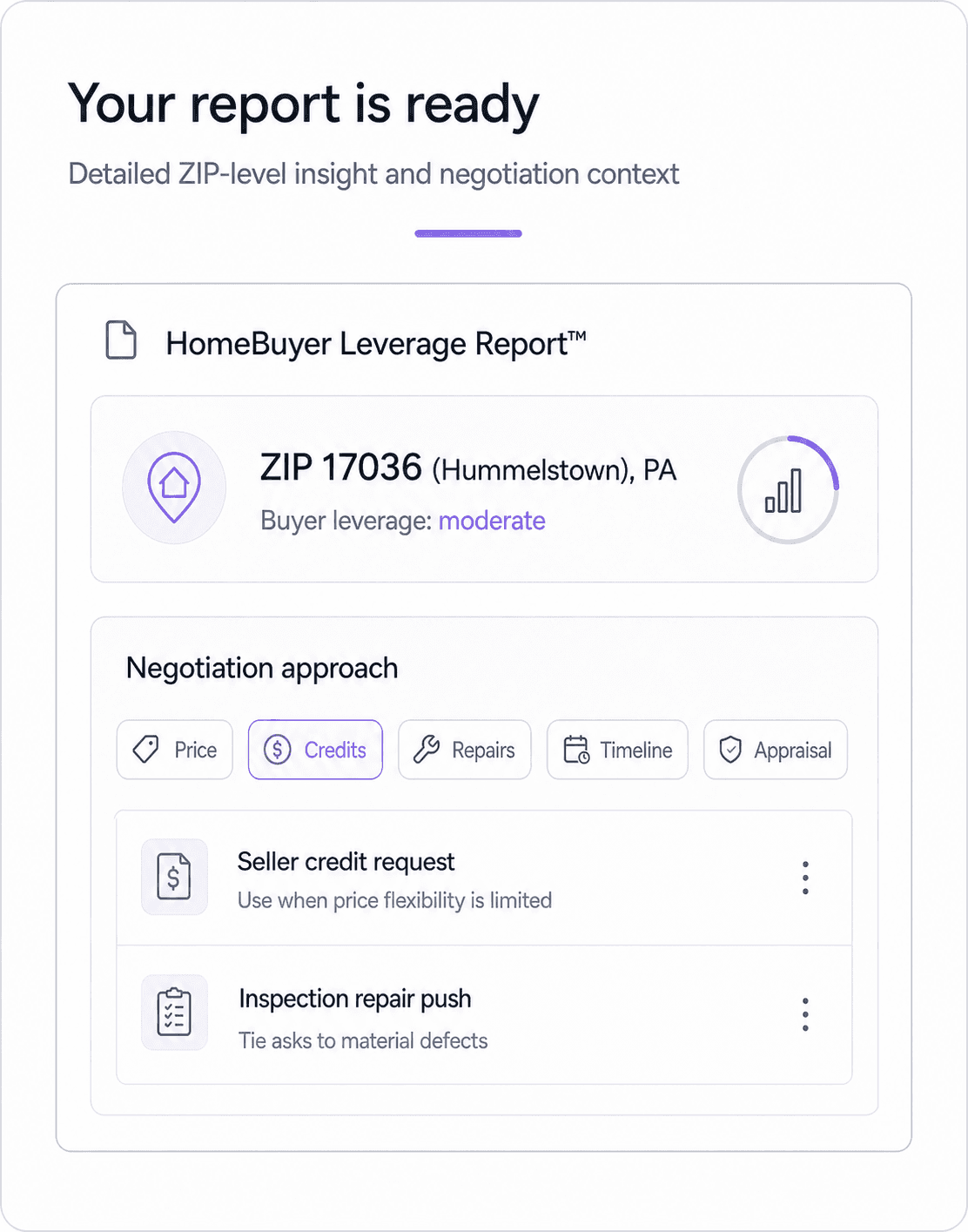
Access the full HomeBuyer Leverage Report™
The full report combines market data, visual trend history, glossary support, and buyer-facing interpretation in a format built to help you make more grounded decisions before writing an offer.
HTML version
PDF version
Shareable format
Our Process
How the Homebuyer Leverage™ Index Works
Built from public data, calibrated at the ZIP level, and designed to help first-time buyers make more grounded offer decisions.
Step 1
Local Market Data Collection
We gather objective ZIP-level and county-level inputs, including prices, days on market, price cuts, inventory trends, mortgage rates, labor conditions, permits, and other public market signals.
Analyzing ZIP-code data
Data collection
Signal Calibration
Interpretation
Auditing
Buyer Report
Step 2
ZIP-Level Signal Analysis
Our model evaluates those inputs together to estimate how much leverage buyers may have in a specific ZIP code, rather than relying on broad national headlines or agent anecdotes.
Step 3
Market Context and Comparison
We compare each ZIP to its surrounding region and state so buyers can see whether local conditions are stronger, weaker, or roughly in line with the broader market around them.
We refine our models, analyze ZIP insights and trends, and continually re-calibrate our models to keep our data up to date. AI and ChatBots cannot do this.
Our data
Your home options
Step 4
Negotiation Guidance
We convert the data into a buyer-facing report with clear interpretation, negotiation considerations, and practical context for price, credits, repairs, timeline flexibility, and appraisal risk.
Local market environment
Inventory exceeds demand
Buyer > Seller Leverage
Assess negotiation points
Take your time, assess different options
Allow sellers to compete
Why not just ChatGPT or Claude?
Why It Matters
Public housing data, economic context, and calibrated public-data model with plain-English interpretation
See how HomeBuyer Leverage™ turns complex market signals into clearer, more practical guidance for real-world offer decisions.






Why It's Different
HomeBuyer Leverage™ turns pre-processed ZIP-level market data into practical buyer strategy that listing sites and generic AI tools do not provide.
And it's absolutely free.
Redfin, Zillow, and chatbots can show raw information. HomeBuyer Leverage™ pre-processes, calibrates, and interprets public market data at the ZIP level so buyers get clearer context and a more actionable negotiation plan.
Beyond listing-site snapshots
Listing platforms surface inventory, price history, and basic trends, but they do not tell buyers how those signals fit together or what they imply for leverage in a specific ZIP code.
Pre-processed and calibrated data
Our model does not rely on raw prompts or unstructured scraping. The underlying housing and economic data are already cleaned, normalized, benchmarked, and calibrated before interpretation begins.
ZIP-level buyer leverage context
The tool estimates how much negotiating room buyers may have in one ZIP, then compares that local picture to the surrounding region and state so buyers can see whether conditions are truly stronger or softer nearby.
What generic AI cannot do on its own
A chatbot can summarize information, but it does not come with a calibrated market model, structured local benchmarks, or a built-in interpretation framework for buyer leverage and negotiation positioning.
Actionable negotiation guidance
The Report translates market conditions into a practical plan: where to push on price, when to ask for credits, how to think about repairs, how much urgency may be needed, and what risks deserve more caution.
Built for first-time buyers
The goal is not more data for its own sake. It is to help first-time buyers make better offer decisions with evidence that is more objective, more local, and more decision-ready than what they get from listing sites alone.
FAQs
Common Questions
What this tool is, what it is not, and how to use it.
What is HomeBuyer Leverage™?
Are you a real estate agent, mortgage broker, or financial advisor?
How is this different from Redfin, Zillow, or Realtor.com?
How is this different from asking a chatbot about my market?
Why is the tool free?